
Starting a vinyl collection looks more complicated from the outside than it is. There is gear to choose, a vocabulary of pressings and grades and cartridges, and a sense that there is a right way to do it that everyone else already knows. There is not. A record collection is just records you like, played on something that does not damage them, looked after well enough to last. Everything else is detail.
This guide is the honest, complete version of getting started. It covers what vinyl actually costs, the gear you need, what to buy first and where, how to check a used record, how to care for and organize what you own, and the handful of beginner mistakes worth skipping. It is long because it is meant to be the only guide you need to read before you begin. Where a topic deserves a guide of its own, it points you to one.
First, an honest word on cost and what you are signing up for
Vinyl is having a long resurgence. Record sales have climbed almost every year for nearly two decades, and there is more music pressed and more places to buy it than at any point since the format's first heyday. None of that makes it the cheap or convenient way to listen to music, and it is worth being clear-eyed about that before you spend anything.
A workable turntable setup costs somewhere between 300 and 500 dollars, and it is easy to spend more once a separate preamp, better speakers, or a nicer cartridge are in the picture. Records themselves run roughly 25 to 40 dollars new, and a fair bit less used. And vinyl wears: every play drags a stylus through the groove, so a record is a physical thing that ages, not a file that stays identical forever. Good gear and good care slow that wear to a crawl, which is much of what this guide is about, but it is honest to say it exists.
What you get in return is not convenience. It is a deliberate way to listen. You choose a record, you commit to a side, you sit with an album the way it was sequenced rather than shuffling singles. If that sounds appealing rather than tedious, you will enjoy collecting. If it does not, streaming is genuinely better at being streaming. Assuming it appeals, here is how to begin.
The turntable: enough gear, and no more
You need a turntable and something to play it through. The trap at the start is overthinking this in both directions, spending too much chasing an audiophile setup, or spending too little on something that quietly ruins your records.
A sound beginner setup has three parts. A turntable with a counterweighted tonearm and a replaceable cartridge. A phono preamp, which boosts the turntable's faint signal to a normal level and is often built into the turntable itself. And speakers, either powered speakers that plug straight in, or passive speakers driven by an amplifier or receiver.
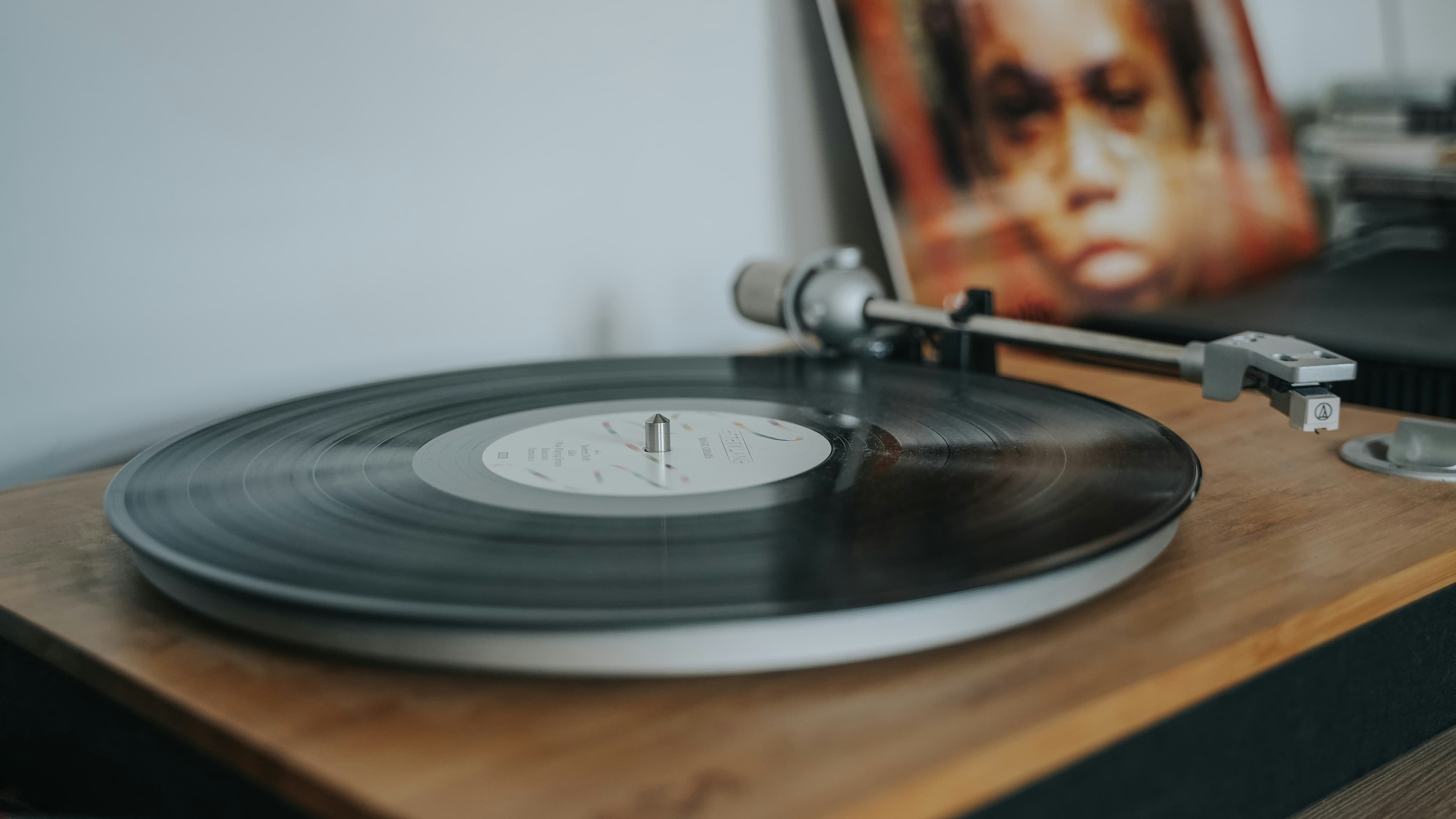
When you look at turntables you will run into the belt-drive versus direct-drive question. A belt drive spins the platter with a rubber belt that isolates it from the motor; a direct drive connects the motor straight to the platter and gets up to speed instantly. For home listening, at the same price, neither is meaningfully better than the other. What matters far more is the cartridge and tonearm: a good cartridge on either drive type beats a mediocre cartridge on the "better" one every time. So do not agonize over drive type. Look instead for an adjustable counterweight and anti-skate, a replaceable cartridge, and a reasonably solid platter. The Audio-Technica AT-LP120X, the Fluance RT82, and the Rega Planar 1 are three well-regarded examples in the entry range that get those fundamentals right. Whichever you choose, give it the half hour of careful assembly it deserves; our guide to setting up a turntable walks every step from unboxing to first play.
The one thing genuinely worth being firm about is what to avoid: the cheap all-in-one suitcase players, the Crosley Cruiser and its many lookalikes. They are inexpensive and they look charming, but most use a ceramic cartridge that presses on the record with around five to six grams of force, roughly double what a record should take. Every play wears the grooves. Your records will outlast any turntable you buy, so the rule at the start is simple: do not buy a player that damages the thing it exists to play. You do not need expensive gear. You need gear that treats records properly.
Choosing your first records
The most common beginner mistake is not a gear mistake. It is buying records you think you are supposed to own.
There is a strong pull, when you start, toward the "essential" albums, the canon, the records that turn up on every list. Ignore it for now. Buy the albums you already listen to and would happily sit through from start to finish. Vinyl rewards full-album listening more than any other format, because getting up to skip a track is real friction, so the records that serve you best early are the ones you already love front to back.
A little vocabulary helps here. Most albums come as a 12-inch LP played at 33 1/3 RPM, and that is the format to build a collection around. You will also see 7-inch singles played at 45 RPM, which hold a song or two per side, and occasionally other speeds and sizes. RPM simply means the rotation speed, and your turntable has a setting for each; playing a record at the wrong speed is harmless but immediately obvious. For now, 12-inch LPs at 33 are almost everything you need to know.
Start small. Ten to twenty records is plenty for a first collection. That is enough to learn your turntable, build the habit of actually sitting and listening, and discover what you genuinely reach for, without spending heavily before you know your own taste. Most collectors settle into something like fifty to a hundred records over a first year. There is no correct number and no pace you are meant to keep.
New or used
Both are fine, and most collectors end up with a mix.
New pressings are easy: widely available, in perfect condition, no inspection needed. You pay full price, and current pressings vary in mastering quality, but you know exactly what you are getting.
Used records are cheaper, often much cheaper, carry some history, and open up everything that is simply out of print. The catch is condition, which ranges from as-good-as-new to unplayable, so a used record is only a bargain if you check it. More on that below. If you find yourself caring which version of an album you have, our guide to identifying which pressing you own covers how to tell pressings apart. At the very start, do not worry about it. Buy a copy that plays well and enjoy it.
Where to buy records
Four kinds of place will cover almost all of your collecting, and each is good at something different.
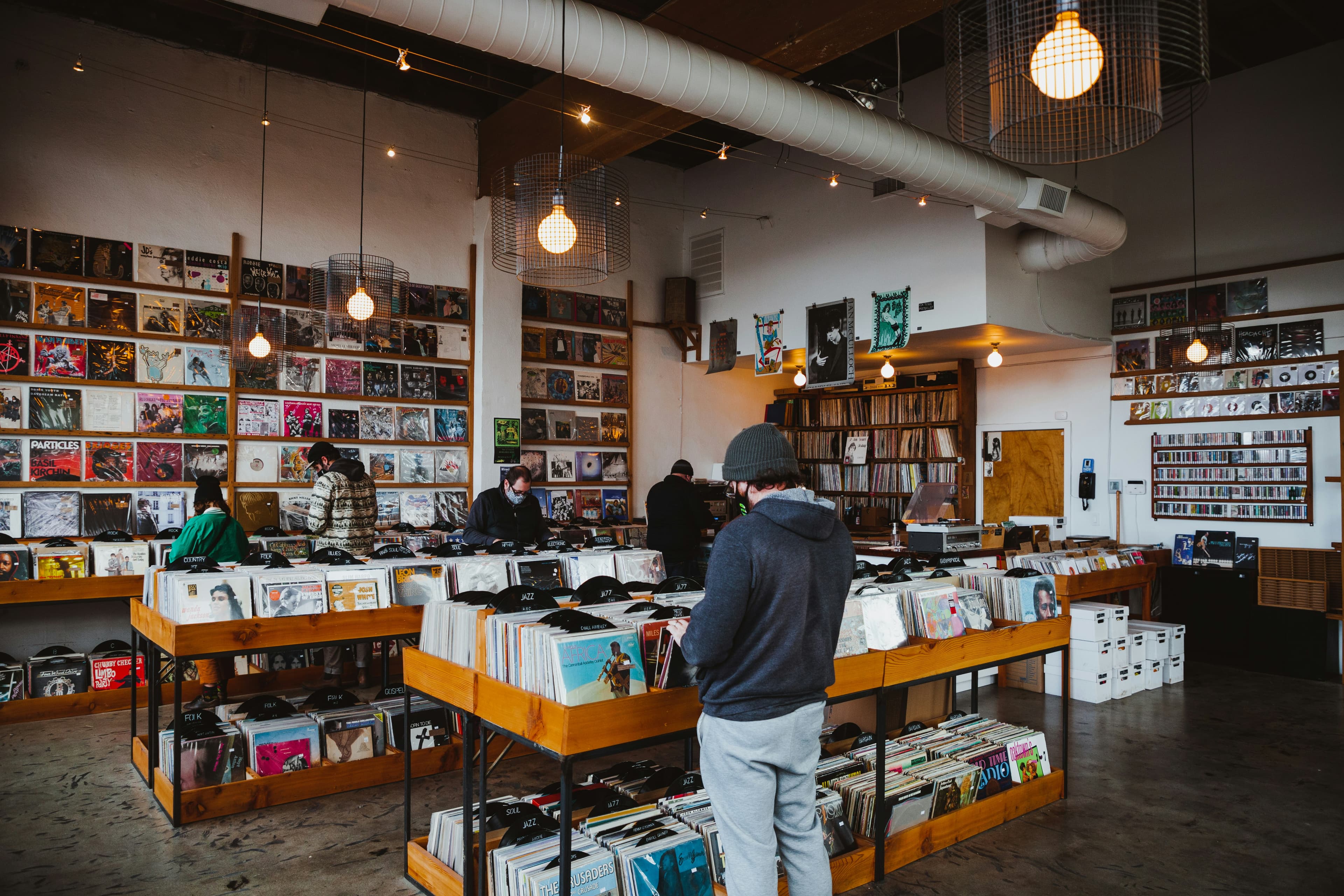
Your local record store is the best place to begin. You can hold a record before buying it, flip through crates and stumble onto things you would never have searched for, and lean on staff who genuinely know music. A good local shop teaches you more in a few visits than any guide can, and it is worth supporting so it stays open.
Discogs is the largest online marketplace for records, with tens of millions of copies listed by sellers worldwide. It is where you go to hunt a specific record rather than browse, and it catalogs releases precisely, down to the individual pressing. It is worth understanding properly, and our beginner's guide to Discogs walks through the whole platform.
Secondhand spots, thrift stores, estate sales, flea markets, and record fairs, are the bargain end. Prices can be wonderful and the finds can be genuine treasure, but condition is a gamble and the selection is whatever turns up. Treat it as fun rather than reliable.
Two habits make all of this go better. The first is to keep a want list, a running note of records you are looking for. It keeps your buying true to what you actually want and stops the impulse purchases you regret. The second is to check prices before you buy. The same album in different pressings can vary wildly in price, and Discogs shows what copies have actually sold for, so a minute of looking tells you whether the record in front of you is a fair deal or a hopeful one.
How to check a used record
Buying used is where beginners lose money, and a little care fixes it.
In person, slide the record out and tilt it under a light. Light scuffs are normal and usually harmless. What you are looking for are deep scratches you can catch with a fingernail, which you will hear, and any warp when you sight along the surface. Check the sleeve too, since it is graded and priced separately from the disc.
Online, you cannot inspect the record, so you rely on the grading. The record trade uses the Goldmine scale, and the words do not mean what they sound like. A record graded Very Good still has clearly audible surface noise. Near Mint is the grade that matches what most people picture when they imagine a record in good condition. Read the seller's grading and their written notes carefully, and favor sellers with a long history of good feedback. Knowing just that one fact, that Very Good is noisier than it sounds, will save you most of the disappointment beginners run into.
Care: looking after records from day one
Records last for decades, even generations, but only if they are stored and handled with a little care. Build the habits now and they cost you nothing later.
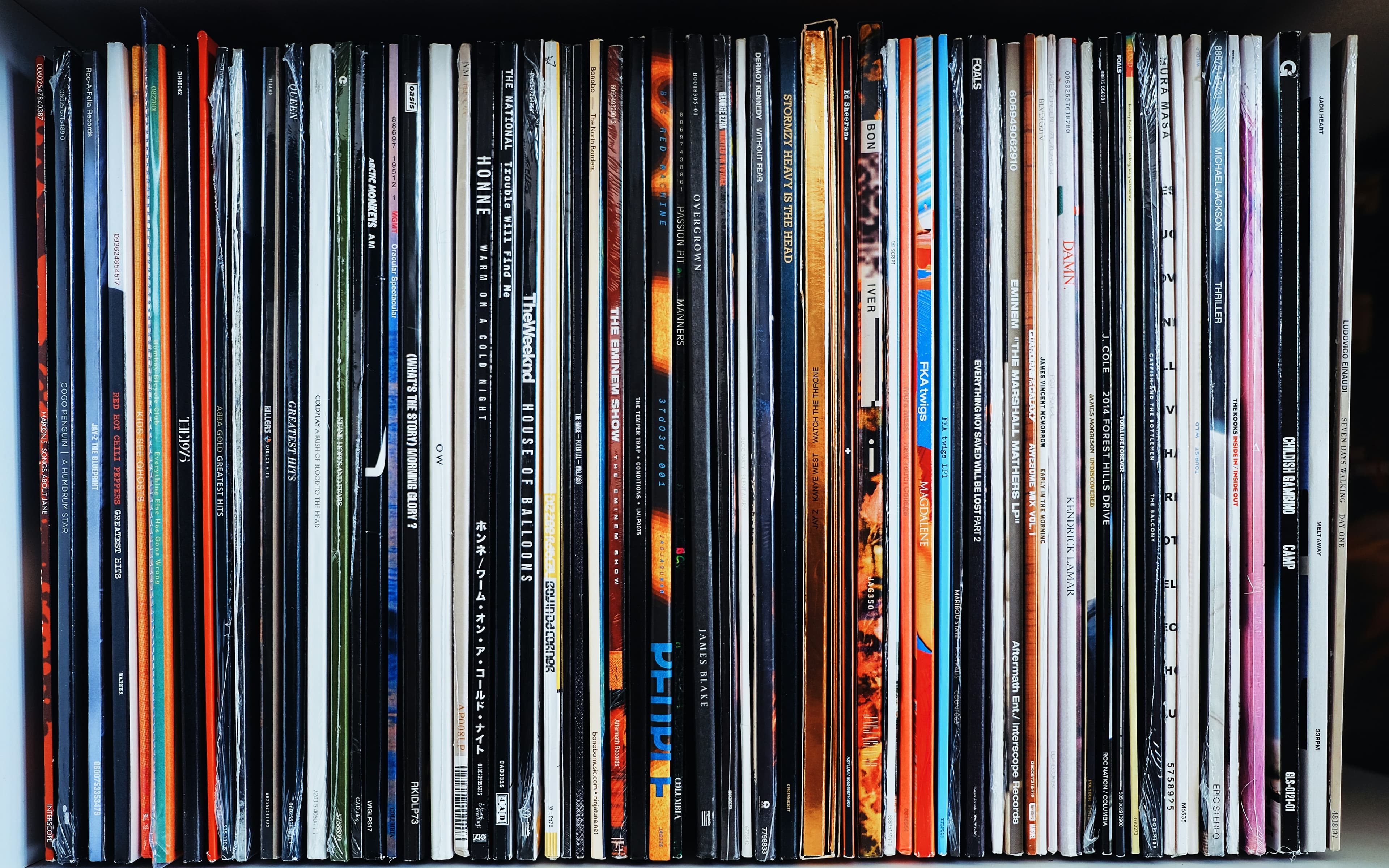
Store records upright, never stacked flat. A flat stack puts weight on the lower records and warps them over time. Shelved vertically, like books, they stay flat indefinitely. Keep them somewhere cool and dry, out of direct sun and away from radiators, since heat is what warps vinyl fastest.
Replace the paper inner sleeves. Most records come in a plain paper inner sleeve, and paper sheds fine fibers and lightly scratches the surface every time the record slides in and out. Anti-static poly-lined inner sleeves cost very little, and swapping them in is one of the cheapest things you can do for your records' long-term sound. Outer sleeves, clear covers for the jacket, protect the artwork and are worth it for records you care about.
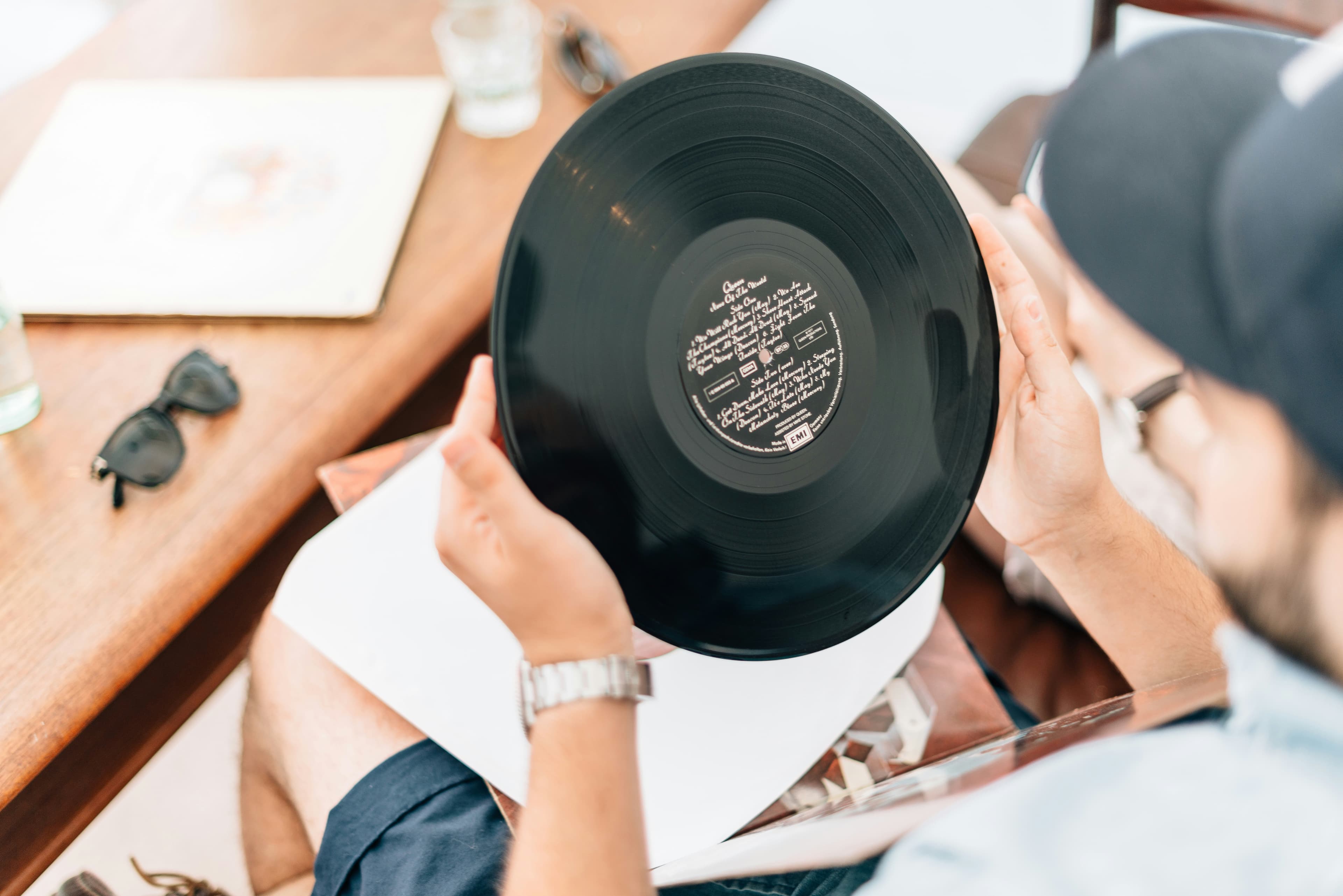
Handle records by the edge and the label, keeping fingers off the grooves, where oils attract dust. A carbon-fiber brush run over the record before each play lifts dust and static in about five seconds. Cleaning a genuinely dirty record is a topic of its own, worth a dedicated read when you get there, but day-to-day, a brush and clean sleeves do most of the work.
Organize the collection so you actually use it
A small collection needs no system. A growing one does, because the quiet failure of an unsorted collection is that you stop seeing most of it and keep reaching for the same ten records.
Pick an order and keep to it. Alphabetical by artist is the most common and the easiest to search. Some collectors sort by genre, some chronologically, some by how often they play things. The specific scheme matters less than having one, so that any record is findable and the whole collection stays in view rather than just the front of the crate.
Catalog your collection as you go
The moment you have more than a handful of records, start logging them. It sounds like bookkeeping, but it pays off quickly: a catalog tells you what you own when you are standing in a shop wondering if you already have something, what your collection is worth, and where a record is on the shelf.
Most collectors catalog on Discogs, because logging a record there is just matching it to an existing database entry. Our complete guide to cataloging on Discogs covers the whole process. The important advice is simply to start early. Cataloging records as you buy them is a thirty-second habit. Cataloging two hundred at once, months later, is a chore you will keep putting off.
Find your people
Collecting is more fun, and you learn faster, with other collectors around. Your local store is the obvious place, but there is a large online world too: the r/vinyl community on Reddit, Discogs groups, vinyl Discord servers, and countless regional and genre groups. They are good for recommendations, for sanity-checking a price, and for the simple pleasure of talking about records. Most of these communities are welcoming. A small minority can be snobbish, so take the gatekeeping lightly and ignore anyone who makes a hobby feel like an exam.
The beginner mistakes worth skipping
Most of what trips up new collectors comes down to five things, and all of them are easy to sidestep once you know they exist.
The first is the suitcase turntable, the one piece of gear that actively harms your collection. The second is chasing trends, the limited colored-vinyl variants and rare pressings and "essential" lists that pull you toward buying records as objects rather than as music. The third is neglecting care, leaving records in paper sleeves, stacking them flat, standing them in the sun. The fourth is buying too much, too fast, filling a shelf in a hurry instead of building it record by record. And the fifth is treating records as an investment. A few records appreciate, most do not, and collecting for resale value is a reliable way to end up with records you do not actually want to hear. Buy what you will play.
Why it is worth it
A vinyl collection asks more of you than a streaming app. You choose a record, you get up to flip it, you listen to it whole rather than as a shuffle of singles. That friction is the entire point. It turns listening back into something you do on purpose, with your attention, rather than something playing in the background.
It also becomes something you can build on. Once your collection is logged on Discogs, it stops being just a shelf and becomes data you can use. Analog is built on exactly that. It connects to your Discogs collection, recognizes the record playing on your turntable, and helps you decide what to play next from the records you already own. The collection you start today is what makes a tool like that useful later.
So start small. A turntable that respects your records, ten or twenty albums you already love, somewhere dry to keep them, and a habit of logging what you buy. The rest of it grows from there, one record at a time.