
A vinyl record is worth roughly what other copies of the same pressing, in the same condition, have recently sold for. So finding out takes three steps: work out exactly which pressing you have, grade its condition honestly, then look up what that pressing actually sold for, not what sellers are asking. Discogs does most of the work for free, and a handful of apps put its numbers in your pocket. Most records turn out to be worth a modest amount, a few are worth a surprising one, and the difference almost always comes down to which copy you're holding rather than which album it is.
Find the exact pressing first
The album isn't what gets valued. The copy is. Frank Ocean's Blonde shows how far apart two copies of one album can be. Its first vinyl edition was sold for 24 hours on Black Friday 2016 through Frank Ocean's own website, with "blond" printed on the record. An official reissue followed in December 2022 and has been pressed again in identical runs since. Both are the same album with the same artwork, and on Discogs, at the end of October 2026, the first pressing's median sale was $400 while the reissue's was $153.65. A third copy, an unofficial pressing from 2022, has never sold on Discogs at all.
Demand explains the gap more than age. On the release pages, 17,885 people have the first pressing in their Wantlist against 8,754 who own it, while the reissue is owned by more people than want it. An old record isn't valuable just for being old, either. A German pressing of Fleetwood Mac's Rumours from 1977, a record more than 15,000 Discogs members own, sold for a median of $26.92, while a 45 rpm double LP reissue from Record Store Day 2011 sold for a median of $74.95.
That makes identification the step that matters most, and the one people skip. The catalog number on the spine and label narrows it down, and the matrix codes in the deadwax settle it. Our guide to telling which pressing of a record you own walks through every clue, in the order to check them. Watch out for unofficial copies in particular. Discogs blocks counterfeits and unauthorized bootlegs from its marketplace, so a bootleg that looks like a valuable original may have no sale price at all.
Grade it honestly
Condition moves the price as much as the pressing does. Discogs grades records on the Goldmine standard, from Mint down to Poor, with the disc and the sleeve graded separately. Discogs' own grading guide puts a Very Good Plus record at "generally worth 50% of the Near Mint value" and a Very Good one at 25%. A record that plays with light surface noise and has a sleeve with a seam split is not a Near Mint record, however much you love it.
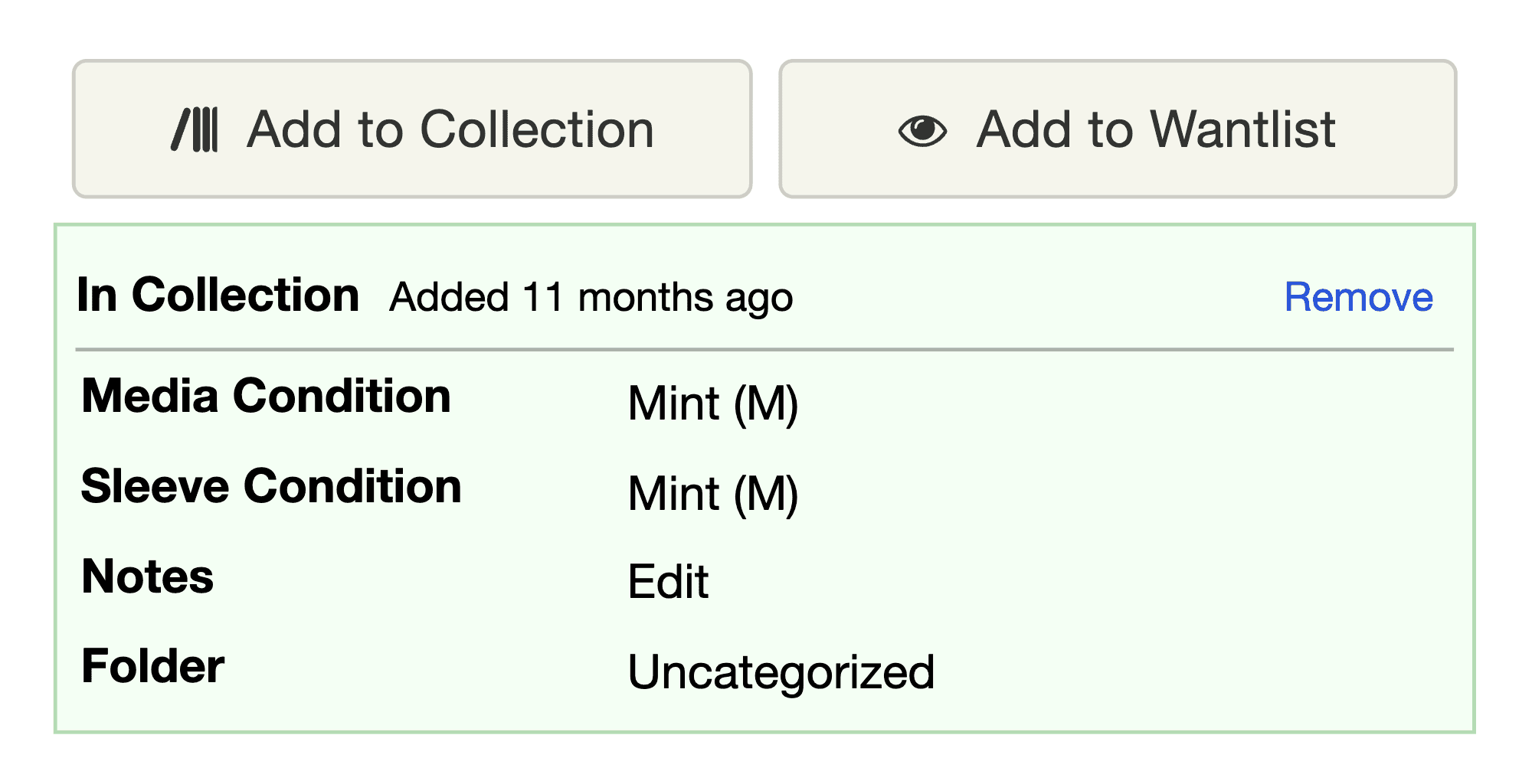
Grade under a single bright light, tilting the record so scuffs and scratches catch it, and play it if you can, since a record that looks worn can play cleanly and the reverse happens too. Our guide to cataloging a collection on Discogs describes each grade in plain terms.
Look up what it sold for
Once you know the pressing, open its release page on Discogs (not the master page, which groups every version together). The Statistics box shows when a copy last sold and the lowest, median and highest prices it has sold for on Discogs, next to how many members have it and want it. The median is the number to start from: the low end is usually a worn copy, the high end a sealed or near perfect one.
Signed in, you can also open the release's full sales history. When you list a record for sale, Discogs also suggests a price, and its help pages say that suggestion is based on the media condition you choose and the recent sales of that release in similar condition.
Two other sources are worth knowing. eBay's sold listings show what copies recently went for, as long as you filter for sold items rather than reading asking prices; it now asks you to sign in for that view. For rare records, Popsike keeps an archive of more than 30 million auctions, updated daily, which helps when a record sells too rarely for Discogs to show a meaningful median.
The thing to ignore is the asking price. A copy listed at $300 that has sat unsold for two years tells you what one seller hopes for, not what the record is worth.
The apps that value records
If you want a number on your phone, the apps below do it, and every one of them depends on the same two steps above: the right pressing and an honest grade.
Discogs is free and the reference the others draw on. Its app compares prices on the marketplace and shows the estimated value of your whole collection, built from real Discogs sales. If you only install one, install this.
VinylBox works on top of your Discogs account and is the most useful when you're selling: it suggests prices as you list a record on the Discogs Marketplace, and a Home Screen widget can follow the marketplace price of one release. It's free, with a Pro subscription for its extras.
Record Scanner identifies a record from a photo of its cover, its barcode or its catalog number, and shows an average market price using Discogs data. It's quick in a shop, where barcodes are often missing or covered by stickers.
VinylSnap does the same from one photo, adds a suggested grade based on the visible wear, and keeps a running total of what you've scanned. Its listing doesn't say where its prices come from, so it's worth checking a number that surprises you against Discogs before you act on it.
The catch with every scanning app is the first step. A photo of the front cover identifies the album, and a barcode narrows it to a release, but neither can read a matrix code in the deadwax. For most records that's close enough. For anything the app says is valuable, open the release it matched and check the catalog number and the runout against your copy, because a scan that lands on the wrong pressing gives you the wrong price with full confidence.
Your whole collection
To value a shelf rather than one record, add the records to a Discogs collection. Discogs then shows a minimum, median and maximum value for the whole collection, adding up the recent sale prices of every release in it.
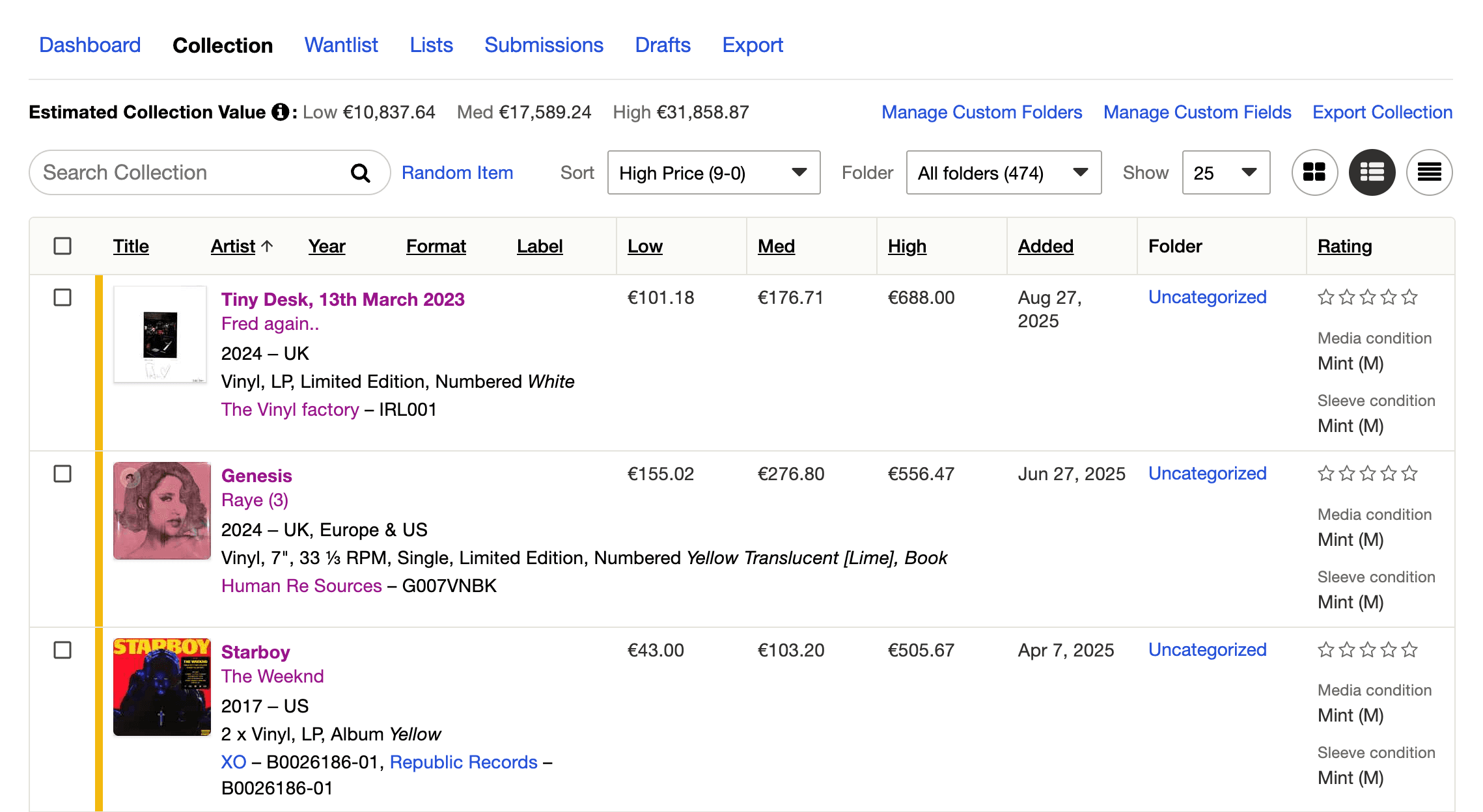
Treat that range as a sensible estimate for insurance or for deciding what to sell, not as an appraisal. It doesn't know the condition of your copies, and a release that has never sold on Discogs adds nothing to it, so a collection with rare or obscure records is often undervalued. If one record turns out to be worth serious money, a specialist dealer or an auction house that handles records will tell you more than any number on a screen.
What's it worth to you
Most records are worth a modest amount: that German Rumours, from one of the best-selling albums ever made, sells for a median of $26.92. That's fine. A record's other value is the one no app can put a number on: the evenings it fills. If that's the part you care about, Analog, the app I make, reads the same Discogs collection to tell you which record is on the turntable and what to play next from your own shelf. It doesn't put a price on anything; our guide to the app that tells you what record is playing explains what it does instead. Whatever the number turns out to be, a record you play is worth more than one you keep sealed in case.